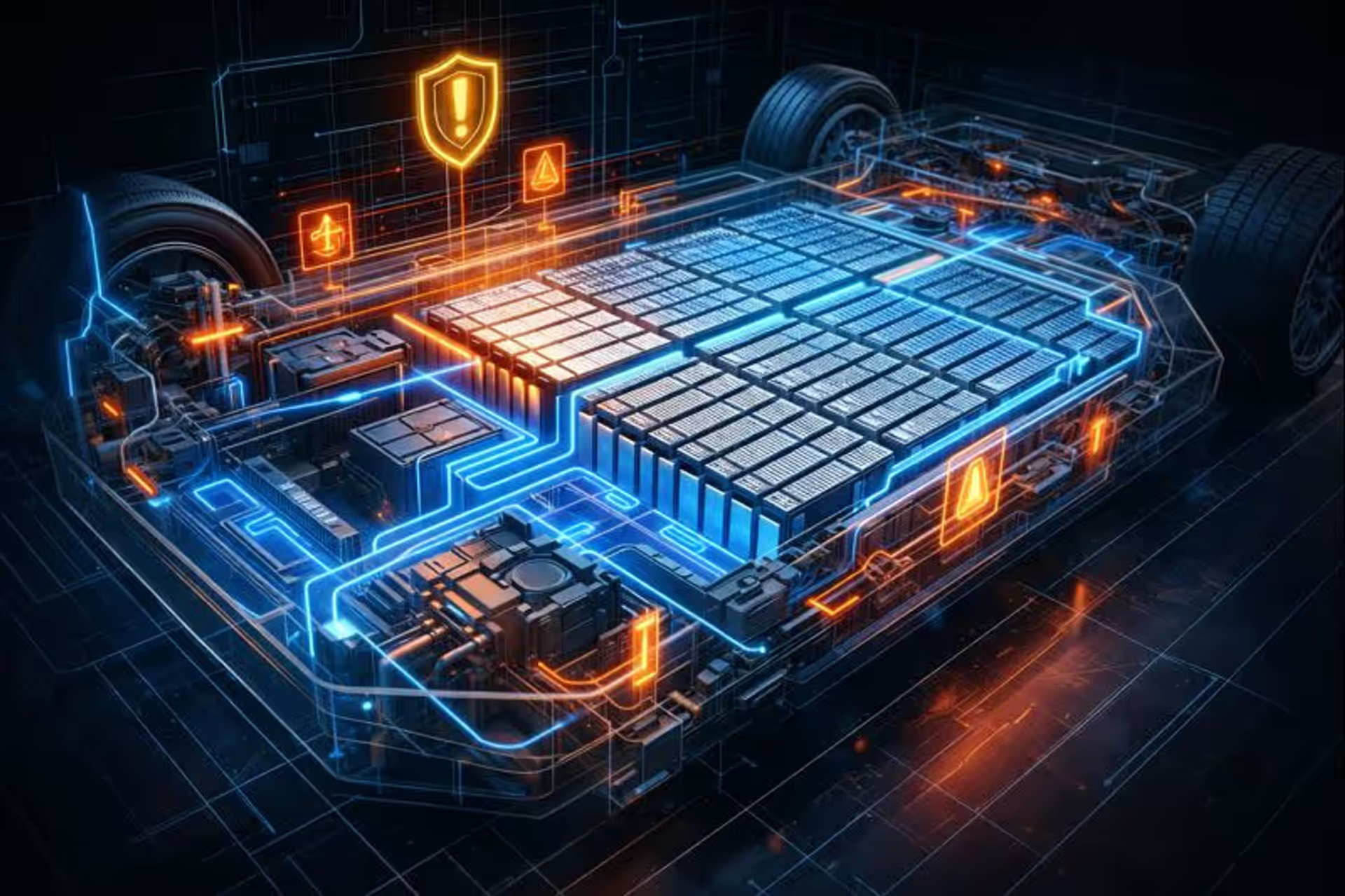
The invisible architecture of safety
EV Safety and Regulation : Why Battery Safety Standards Are Becoming a Global Priority

Content
Content
Introduction: Safety as the Foundation of Electric Mobility
The electric vehicle revolution has been celebrated for many things — environmental benefits, technological innovation, driving experience, and the promise of sustainable transportation. What receives far less attention, yet increasingly determines the industry's trajectory, is the fundamental question of safety. Not safety in the conventional automotive sense of crash protection and occupant survival, though that matters too, but the specific and complex challenge of electric vehicle battery safety — the management of enormous energy stores in chemistries that, under certain conditions, can fail catastrophically.
This is not a marginal concern. The lithium-ion batteries that power modern electric vehicles contain energy equivalent to hundreds of pounds of gasoline, packaged in chemical configurations that can, if mismanaged, release that energy rapidly and violently. The phenomenon known as thermal runaway — a self-reinforcing cascade of heat generation that can lead to fire or explosion — represents an engineering challenge fundamentally different from anything the automotive industry faced in a century of internal combustion development.
The stakes have grown proportionally with adoption. When electric vehicles represented a tiny fraction of the global fleet, battery incidents were curiosities — isolated events affecting early adopters who understood they were pioneering new technology. As EVs approach mainstream adoption — representing over 18% of global new car sales and growing rapidly — the tolerance for such incidents has collapsed. A single dramatic battery fire now generates international headlines, regulatory scrutiny, and consumer anxiety that can affect entire brands and markets.
EV safety has consequently moved from engineering concern to strategic imperative. Regulatory bodies across major markets are implementing increasingly stringent electric car safety standards. Automakers are redesigning vehicles around safety requirements that didn't exist five years ago. Battery manufacturers are investing billions in chemistries and architectures that prioritize safety alongside energy density and cost. The entire value chain is being reshaped by the recognition that the electric vehicle future depends on demonstrating — not just claiming — that these vehicles are as safe as or safer than what they replace.
"The industry has reached an inflection point where safety is no longer a feature to be marketed but a foundation that must be proven," observes a senior battery safety researcher. "The regulatory environment in 2026 and 2027 reflects this reality — safety standards are tightening faster than almost anyone anticipated."
This analysis examines the technical realities of battery safety risks, how automakers and suppliers are responding, and how EV regulations are evolving across the world's major markets. Understanding these dynamics is essential for anyone seeking to comprehend not just where electric vehicles are heading, but whether they will arrive safely.
Why EV Safety Is Now a Global Regulatory Priority
The elevation of EV safety to regulatory priority status reflects the convergence of multiple factors — growing adoption that increases risk exposure, public perception shaped by dramatic incidents, and the recognition that proactive regulation can prevent problems that reactive responses cannot address.
Growing Adoption and Risk Exposure
The mathematics of risk exposure are straightforward. As electric vehicle populations grow, the absolute number of incidents grows proportionally even if incident rates per vehicle remain constant or decline. A failure rate that produced one incident annually when 100,000 EVs were on the road produces ten incidents annually when one million are deployed, and one hundred when ten million are driving. The global EV fleet now exceeds 40 million vehicles and is growing by over 10 million annually. Even extraordinarily low failure rates translate to meaningful absolute numbers at this scale.
This scaling effect transforms the risk calculus for regulators and manufacturers alike. When EVs were niche products, the occasional incident could be addressed through individual recalls and engineering fixes. When EVs represent a significant portion of the vehicle fleet, incident patterns become statistically meaningful, public attention intensifies, and regulatory intervention becomes politically necessary. The transition from niche to mainstream has compressed the timeline for addressing safety concerns that might have been tolerated during a longer adoption curve.
The geographic concentration of adoption amplifies certain risks. China, with over 60% of global EV sales, has accumulated the largest fleet and consequently the most extensive real-world experience with battery incidents. This concentration has driven Chinese regulators to implement some of the world's strictest EV safety regulations, informed by incident data that other markets have not yet accumulated. The regulatory response in China now influences global standards as manufacturers serving multiple markets design to the strictest requirements.
Public Perception and the Visibility of Battery Fires
The public perception of EV fire risk bears an uneasy relationship with statistical reality. Electric vehicles catch fire at rates significantly lower than internal combustion vehicles — various studies suggest EV fire rates are one-tenth to one-twentieth those of gasoline vehicles per mile traveled. Yet public concern about EV fires exceeds concern about conventional vehicle fires by substantial margins. This perception gap reflects several factors that regulators must navigate.
The visual drama of battery fires contributes to their outsized impact. A lithium-ion battery fire burns differently from a gasoline fire — often more intensely, sometimes reigniting after apparent extinguishment, and requiring specialized suppression techniques. Videos of EV fires spread rapidly on social media, their unfamiliar characteristics making them appear more dangerous than the routine gasoline fires that occur far more frequently but attract no attention. The novelty effect amplifies concern in ways that statistical comparison cannot counteract.
The circumstances of some high-profile incidents have reinforced anxiety. Fires occurring while vehicles are parked and charging — rather than following crashes — challenge the assumption that avoiding accidents means avoiding fire risk. Fires that reignite days after initial suppression suggest that the problem persists even after apparent resolution. Fires in enclosed spaces like garages and parking structures raise concerns about property damage extending beyond the vehicle itself. Each unusual circumstance adds to a narrative of unpredictable danger that rational risk assessment struggles to displace.
Why Isolated Incidents Trigger Systemic Change
The regulatory response to EV safety concerns demonstrates how isolated incidents can catalyze systemic change in ways that aggregate statistics cannot. A single fatal battery fire can generate more regulatory momentum than years of data showing EVs are statistically safer than conventional vehicles. Understanding this dynamic is essential for comprehending why EV regulations have tightened so dramatically.
The mechanism operates through several channels. Media coverage of dramatic incidents creates public awareness and concern that politicians and regulators cannot ignore. Litigation following incidents establishes legal precedents and liability exposure that motivates manufacturer caution. Insurance industry response to claims data affects both availability and pricing of coverage in ways that shape manufacturer and consumer behavior. Competitive dynamics mean that any manufacturer perceived as less safe suffers market consequences that extend beyond the specific incident.
This sensitivity to individual incidents creates regulatory environments where standards must anticipate rather than merely respond to problems. Regulators cannot wait for statistically significant incident accumulation when each incident generates headlines and hearings. The precautionary principle — acting to prevent potential harms before they are conclusively demonstrated — shapes EV safety regulation in ways it rarely shaped traditional automotive regulation. The result is standards that may exceed what pure risk analysis would justify but reflect the political and social realities within which regulation operates.
Understanding Battery Safety Risks in Electric Vehicles
The technical foundations of electric vehicle battery safety challenges differ fundamentally from traditional automotive safety concerns. Understanding these differences is essential for evaluating both the risks and the regulatory responses intended to address them.
Thermal Runaway: The Central Challenge
Thermal runaway EV incidents represent the most serious battery safety risk — a condition where internal cell temperature increases trigger exothermic reactions that generate additional heat, creating a self-reinforcing cascade that can result in fire or explosion. The phenomenon occurs when heat generation within a cell exceeds the cell's ability to dissipate that heat, causing temperature to rise uncontrollably.
The physics of thermal runaway involve multiple interacting mechanisms. As cell temperature rises above normal operating ranges, the solid electrolyte interface — a protective layer that forms on electrode surfaces — begins to decompose, releasing heat. At higher temperatures, the electrolyte itself begins breaking down, generating flammable gases. If temperature continues rising, the cathode material can release oxygen, providing oxidizer for combustion even without external air supply. At extreme temperatures, the aluminum current collectors melt, creating internal short circuits that accelerate heat generation. Each stage triggers the next in a cascade that can proceed faster than external cooling can counteract.
The challenge is compounded by propagation risk. Modern EV battery packs contain hundreds or thousands of individual cells. Thermal runaway in a single cell can generate enough heat to trigger runaway in adjacent cells, creating a chain reaction that spreads through the pack. This propagation can occur minutes or hours after initial cell failure, complicating both suppression and post-incident safety. Designing packs that contain failure to individual cells or small groups — preventing propagation to the full pack — represents a central focus of current safety engineering.
Why Lithium-Ion Chemistry Creates Unique Challenges
The lithium-ion battery chemistry that enables the energy density required for practical electric vehicles creates inherent safety challenges that cannot be entirely eliminated, only managed. Understanding these challenges illuminates why battery safety requires ongoing vigilance regardless of how mature the technology becomes.
The fundamental issue is energy density itself. The same chemical properties that allow lithium-ion cells to store large amounts of energy in small volumes also mean that energy can be released rapidly under fault conditions. A battery pack storing 100 kilowatt-hours of energy — typical for a modern EV — contains energy equivalent to approximately three gallons of gasoline. If released rapidly, this energy can generate temperatures exceeding 1,000 degrees Celsius and produce toxic, flammable gases that conventional fire suppression cannot easily address.
The organic electrolytes used in lithium-ion cells are themselves flammable, providing fuel for fires once thermal runaway initiates. Alternative chemistries using solid-state electrolytes promise improved safety by eliminating this flammable component, but remain years from commercial deployment at scale. Current cells also operate at voltages and energy levels where internal short circuits — whether from manufacturing defects, physical damage, or degradation over time — can trigger thermal events that less energetic chemistries would not.
Comparing EV and ICE Fire Risks
The comparison between EV fire risk and internal combustion vehicle fire risk provides important context for understanding both the real hazards and the perception gaps that shape regulation. While EVs demonstrate lower overall fire rates, the characteristics of battery fires create distinct challenges that justify specific regulatory attention.
Internal combustion vehicles catch fire at rates of approximately 25-30 fires per billion miles traveled, based on U.S. data. Electric vehicles demonstrate rates of approximately 2-3 fires per billion miles traveled — roughly an order of magnitude lower. This comparison, while favorable to EVs, understates the complexity because the vehicle populations differ in age distribution, usage patterns, and maintenance histories. Older vehicles with degraded components contribute disproportionately to ICE fire statistics, while the EV fleet remains relatively young. As the EV fleet ages, fire rates may shift in ways current data cannot predict.
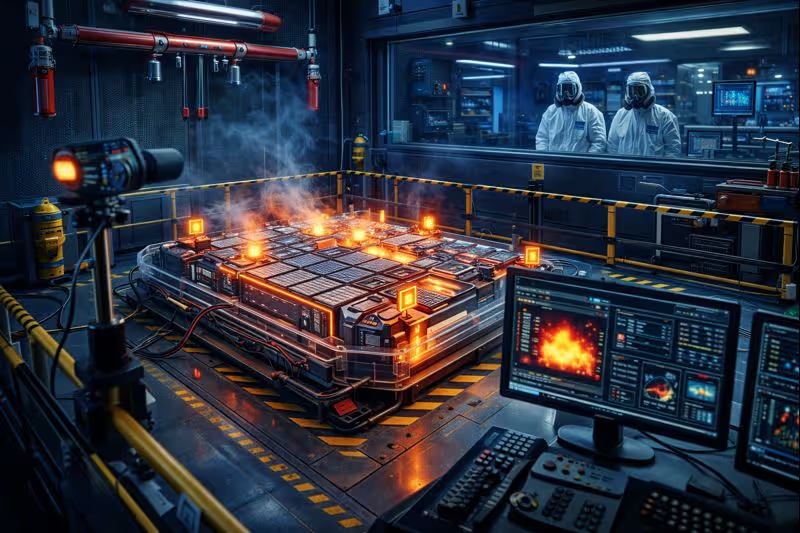
The characteristics of battery fires create challenges beyond simple frequency comparison. Battery fires burn at higher temperatures than gasoline fires, can reignite after apparent extinguishment, and produce toxic gases including hydrogen fluoride that pose risks to first responders and bystanders. Suppression requires specialized techniques and equipment that many fire departments have not yet acquired. The stored energy in a battery pack cannot be quickly released the way fuel can be drained from a conventional vehicle, meaning fire risk persists even after flame suppression. These characteristics justify regulatory attention even if overall fire rates remain favorable.
Table 1: EV Battery Safety Risks and Mitigation Technologies
| Risk Type | Primary Causes | Mitigation Technologies | Effectiveness | Remaining Challenges |
| Thermal Runaway | Internal short circuit, overheating, manufacturing defects | Cell-level thermal fuses, cooling systems, fire-resistant barriers | High for initiation prevention; moderate for propagation prevention | Cascade prevention in high-density packs |
| Internal Short Circuit | Dendrite formation, separator failure, contamination | Ceramic-coated separators, BMS monitoring, quality control | Moderate to high | Detection before thermal event |
| Overcharging | BMS failure, charger malfunction | Redundant voltage monitoring, hardware current limits | High | Rare failure modes still possible |
| Physical Damage | Crash impact, road debris, manufacturing stress | Armored enclosures, structural integration, crush zones | Moderate | Severe impacts can overwhelm protection |
| External Heat | Vehicle fire, adjacent fire, extreme environment | Thermal insulation, fire-resistant materials, venting systems | Moderate | Prolonged exposure can defeat protection |
How Automakers Are Addressing Overheating and Fire Risks
The automotive industry's response to battery overheating electric vehicles concerns has intensified dramatically, with safety considerations now influencing fundamental decisions about battery chemistry, pack architecture, and vehicle design. The investment required reflects both the technical difficulty of the challenge and the commercial necessity of demonstrating safety to regulators and consumers.
Battery Chemistry Evolution
The choice of battery chemistry represents the most fundamental safety decision, with trade-offs between energy density, cost, cycle life, and safety characteristics that vary across available options. The industry's chemistry preferences are shifting in response to safety concerns in ways that would have been difficult to predict five years ago.
Lithium iron phosphate (LFP) chemistry has gained substantial market share despite lower energy density than nickel-based alternatives, driven largely by safety advantages. LFP cells demonstrate significantly higher thermal stability — they resist thermal runaway at temperatures 50-100 degrees Celsius higher than NMC equivalents. The chemistry does not release oxygen during decomposition, eliminating a key accelerant in thermal runaway cascades. These advantages have led manufacturers including Tesla, BYD, and others to adopt LFP for standard-range vehicles, accepting the range penalty in exchange for improved safety margins.
Nickel-based chemistries (NMC, NCA) continue serving applications where energy density requirements justify the additional safety engineering required. High-nickel cells offer 20-30% greater energy density than LFP equivalents, enabling longer ranges in premium vehicles. But these cells require more sophisticated thermal management, more robust containment, and more conservative operating parameters to maintain acceptable safety levels. The cost of this additional safety engineering narrows the economic advantage of high-energy chemistries, contributing to LFP's market share gains.
Solid-state batteries represent the anticipated next generation, promising to address many current safety challenges by replacing flammable liquid electrolytes with solid alternatives. These batteries would resist thermal runaway initiation, eliminate electrolyte-fueled fires, and potentially enable simpler pack architectures with reduced cooling requirements. However, manufacturing challenges have delayed commercial deployment. Current projections suggest limited solid-state availability before 2027-2028, with scale production following later. The safety benefits, when realized, may fundamentally reshape battery safety regulation by eliminating risks that current standards address.
Cooling Systems and Cell Isolation
The thermal management systems in modern EV battery packs have evolved from basic cooling to sophisticated safety-critical infrastructure. These systems serve dual purposes — maintaining optimal operating temperature for performance and longevity, and preventing thermal runaway initiation and propagation under fault conditions.
Active liquid cooling has become standard in most EVs, circulating coolant through channels integrated into the battery pack structure. The coolant absorbs heat from cells during normal operation and charging, maintaining temperatures within the optimal 20-40 degree Celsius range. Under fault conditions, the same systems provide the first line of defense against thermal runaway by removing heat faster than cells can generate it. The sophistication of these systems varies considerably across vehicles, with premium EVs featuring dedicated cooling circuits, temperature sensors on individual cells, and predictive algorithms that anticipate cooling needs.
Cell isolation has emerged as a critical safety strategy — designing packs so that thermal failure in one cell does not propagate to adjacent cells. This requires thermal barriers between cells or cell groups, typically using materials that can withstand extreme temperatures while providing insulation. Some designs incorporate sacrificial elements that absorb heat through phase changes (melting or vaporizing), delaying propagation long enough for cooling systems to respond or occupants to evacuate. The most advanced designs can contain thermal runaway to a single cell or small group, preventing pack-level fires even when individual cell failures occur.
"The engineering challenge is not preventing every possible cell failure — that's impossible with current chemistry," explains an automotive battery engineer. "The challenge is ensuring that when failures occur, they remain contained rather than cascading into pack-level events."
Software-Based Safety Controls
The battery management system (BMS) represents the intelligence layer of battery safety — the software and electronics that monitor cell conditions, control charging and discharging, and intervene when parameters approach dangerous ranges. Modern BMS capabilities have expanded far beyond basic voltage monitoring to incorporate predictive analytics and active safety management.
Continuous monitoring tracks voltage, current, temperature, and impedance across hundreds or thousands of measurement points within the pack. Deviations from expected values trigger alerts, reduced power operation, or system shutdown depending on severity. The challenge lies in distinguishing between measurements indicating genuine problems and sensor anomalies or transient conditions that do not require intervention. Overly sensitive systems generate false alarms that frustrate users; insufficiently sensitive systems may miss genuine warning signs.
Predictive algorithms attempt to identify cells at risk of failure before thermal events initiate. By tracking capacity fade, impedance changes, and temperature patterns over time, these systems can flag cells whose behavior suggests internal degradation that may eventually lead to failure. Vehicles can then limit power, recommend service, or in extreme cases disable driving to prevent incidents. The effectiveness of these predictions depends on the quality of models and the breadth of training data — areas where manufacturers with larger fleets and more operational data hold advantages.
China: Tightening EV Safety Standards at Scale
China's position as the world's largest EV market has made it the primary laboratory for battery safety regulation at scale. The China EV safety standards now being implemented reflect lessons learned from the world's largest EV fleet and establish requirements that increasingly influence global industry practice.
Mandatory Testing Protocols
Chinese regulations require battery packs to undergo standardized testing that exceeds requirements in most other markets. The GB 38031-2020 standard, updated from earlier versions, establishes mandatory tests including thermal propagation, external fire exposure, overcharge, and mechanical shock. The thermal propagation test is particularly stringent — requiring that if thermal runaway is induced in any cell, the pack must either prevent propagation entirely or provide at least five minutes warning before any external fire or explosion, allowing occupant evacuation.
The five-minute warning requirement has driven substantial engineering changes. Achieving this standard requires either containing thermal runaway completely (preventing propagation) or designing packs that delay cascading failures long enough to meet the warning threshold. Manufacturers have responded with enhanced cell isolation, improved thermal barriers, and pack designs that direct venting away from occupant compartments. The requirement has effectively mandated the safety-focused engineering that market forces alone might not have produced.
Testing must be performed by accredited laboratories under government supervision, with results submitted as part of the vehicle certification process. This mandatory certification approach differs from the more voluntary or self-certification frameworks in other markets, creating uniform minimum standards across all vehicles sold in China regardless of manufacturer origin. Foreign manufacturers selling in China must meet the same requirements as domestic competitors, eliminating regulatory arbitrage.
Impact on Domestic Manufacturers
Chinese manufacturers have invested heavily in battery safety technology, driven by both regulatory requirements and competitive differentiation. BYD's Blade Battery, designed around LFP chemistry and a cell-to-pack architecture that inherently limits propagation risk, represents perhaps the most prominent example of safety-driven innovation. The company's marketing has emphasized safety credentials, including dramatic demonstrations of nail penetration tests that competitive cells fail.
The regulatory environment has accelerated consolidation among Chinese battery manufacturers. Smaller producers unable to meet testing requirements or invest in safety engineering have lost market share to larger competitors with resources for compliance. CATL, BYD, and other major manufacturers have strengthened market positions partly through superior safety credentials that smaller competitors cannot match. This consolidation may improve overall safety by reducing the presence of marginal producers, though it also reduces competitive diversity.
Chinese manufacturers exporting to other markets face the interesting challenge of meeting multiple regulatory frameworks simultaneously. Vehicles designed to meet stringent Chinese standards typically exceed requirements in Europe and the United States, potentially providing safety advantages in those markets. However, the cost of this over-compliance affects pricing competitiveness. The global harmonization of safety standards would reduce this complexity, but progress toward harmonization remains slow.
Europe: Safety Regulation Through Certification and Compliance
European EV regulations operate through a framework that combines international standards, EU directives, and national implementation — creating a regulatory environment that emphasizes comprehensive certification and consistent enforcement across member states.
UNECE and EU Frameworks
The United Nations Economic Commission for Europe (UNECE) establishes technical regulations that form the foundation of European vehicle safety requirements. Regulation No. 100 addresses electric vehicle safety specifically, establishing requirements for electrical safety, battery system safety, and functional safety that manufacturers must meet for type approval.
The EU's General Safety Regulation adds requirements beyond UNECE minimums, including advanced safety features and updated testing protocols. Battery safety requirements have tightened progressively, with recent amendments addressing thermal propagation, post-crash electrical safety, and charging safety in ways that earlier versions did not contemplate. The regulatory evolution reflects both technological development and incident experience, with standards updating to address newly identified risks.
The type approval process requires manufacturers to demonstrate compliance through testing at accredited laboratories before vehicles can be sold in any EU member state. This centralized certification creates uniform standards across the single market, preventing regulatory competition between countries and ensuring that all vehicles meet minimum safety thresholds regardless of where they are registered. The process is more rigorous than the self-certification approach used in the United States, though potentially slower and more expensive.
Crash and Battery Safety Integration
European regulations increasingly integrate battery safety into overall crash safety requirements, recognizing that protecting the battery pack during collisions is essential to preventing post-crash fires. This integration reflects the understanding that battery safety cannot be addressed in isolation from vehicle structure and crash protection.
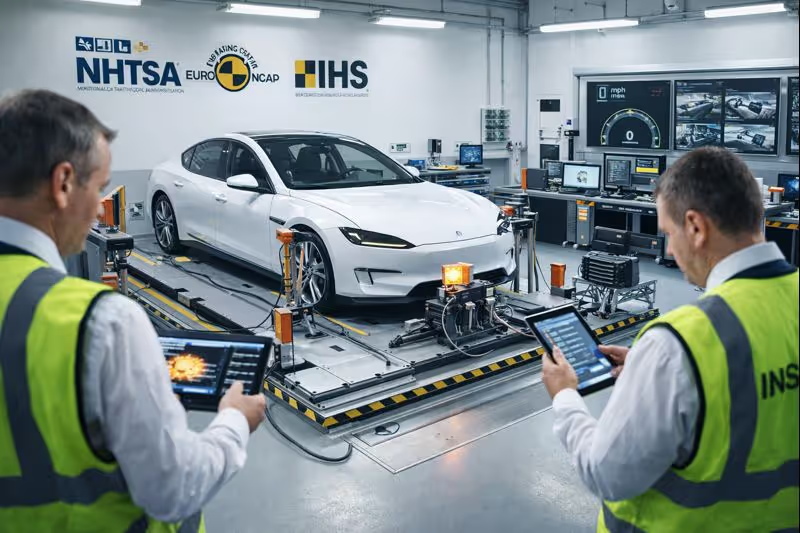
The Euro NCAP rating system, while voluntary, strongly influences manufacturer behavior through consumer-facing safety ratings. Recent protocol updates include battery safety assessments that affect overall vehicle scores. Manufacturers seeking top ratings must demonstrate not only occupant protection but also battery integrity in crash scenarios. The competitive importance of NCAP ratings creates market incentives for safety performance beyond regulatory minimums.
Requirements for post-crash electrical isolation ensure that high-voltage systems disconnect automatically following collisions, reducing both electrical and fire risks to occupants and rescuers. Testing protocols verify that this disconnection occurs reliably across impact scenarios, with timing requirements ensuring isolation before rescuers begin extraction. These requirements have driven standardization of disconnect systems and emergency responder access points across the European fleet.
United States: Federal vs State-Level EV Safety Oversight
The American regulatory approach to EV safety reflects the country's federalist structure, with safety authority divided between federal agencies and states in ways that create both flexibility and fragmentation. Understanding this structure illuminates why U.S. safety regulation differs from the more centralized approaches in China and Europe.
NHTSA and Federal Safety Authority
The National Highway Traffic Safety Administration (NHTSA) holds primary federal authority over vehicle safety, including electric vehicles and their battery systems. NHTSA establishes Federal Motor Vehicle Safety Standards (FMVSS) that all vehicles sold in the United States must meet, enforces compliance through testing and oversight, and manages recall processes when safety defects are identified.
The self-certification system used in the United States differs fundamentally from the type-approval systems in Europe and China. Manufacturers certify their own compliance with FMVSS requirements, submitting documentation to NHTSA but not requiring pre-market approval. NHTSA conducts post-market testing and investigation to verify compliance, with enforcement through fines and mandatory recalls when violations are identified. This approach allows faster market entry but places initial compliance responsibility on manufacturers rather than regulators.
FMVSS requirements specific to electric vehicle safety have evolved more slowly than some industry observers would prefer. While standards address electrical safety, crash protection, and basic battery requirements, the detailed testing protocols for thermal runaway and propagation that characterize Chinese standards are not yet mandated federally. NHTSA has indicated intentions to strengthen requirements, but rulemaking processes take years to complete and face procedural and political obstacles.
State-Level Variation and Legal Liability
The absence of comprehensive federal standards creates space for state-level action, particularly in California, which has historically led on automotive regulation. California's authority to set stricter emissions standards extends to some safety-related areas, and the state has explored additional requirements for EV safety that exceed federal minimums.
The legal liability system in the United States creates additional pressure on manufacturers beyond regulatory requirements. Product liability lawsuits following battery incidents can result in substantial damages, both compensatory and punitive, that provide financial incentives for safety investment regardless of regulatory mandates. The threat of litigation influences manufacturer behavior in ways that direct regulation may not, particularly given the potential for large jury awards in high-profile cases.
"The U.S. regulatory environment relies more heavily on liability pressure than prescriptive standards," notes a regulatory policy expert. "Manufacturers know that incidents leading to injuries or deaths will result in litigation regardless of regulatory compliance. This creates incentives for safety performance that purely regulatory approaches might not achieve."
Table 2: EV Safety Regulations by Region (2026–2027)
| Aspect | China | Europe | United States |
| Primary Framework | GB 38031-2020, mandatory certification | UNECE R100, EU type approval | FMVSS, self-certification |
| Thermal Propagation Test | Mandatory — 5 min warning or no propagation | Increasingly required under amended R100 | Not yet mandatory federally |
| Fire Testing Requirements | Comprehensive, including external fire exposure | Included in type approval testing | Limited federal requirements |
| Certification Process | Government laboratory testing required | Third-party accredited laboratory | Manufacturer self-certification |
| Enforcement Strictness | High — required for market entry | High — required for market entry | Moderate — post-market enforcement |
| Recent Changes (2024-2026) | Strengthened propagation requirements | Updated R100 amendments, NCAP protocols | Proposed rulemaking in progress |
How Regulation Is Reshaping EV Design and Costs
The tightening of electric car safety standards globally is not merely affecting compliance processes but fundamentally reshaping how electric vehicles are designed, engineered, and priced. The cost of safety has become a significant factor in vehicle economics.
Safety-Driven Engineering Trade-offs
Designing to stringent safety standards forces trade-offs that affect other vehicle attributes. Enhanced cell isolation adds weight and volume, reducing the energy available for propulsion and potentially compromising range. More robust battery enclosures increase structural mass, affecting both range and handling dynamics. Conservative operating parameters that maximize safety margins reduce usable battery capacity, requiring larger packs to achieve equivalent range.
The choice of battery chemistry exemplifies these trade-offs most clearly. LFP chemistry's safety advantages come at the cost of lower energy density — vehicles using LFP require larger, heavier battery packs to achieve the same range as those using high-nickel chemistries. For vehicles where range is a primary competitive dimension, this trade-off constrains the shift toward safer chemistries. The market is bifurcating, with safety-optimized LFP packs serving standard-range applications while high-nickel packs remain necessary for premium long-range vehicles that demand maximum energy density.
Cooling system requirements have become more demanding as safety standards tighten. Meeting thermal propagation requirements during charging — when heat generation is highest — requires cooling capacity that may exceed what performance optimization alone would justify. The weight, complexity, and cost of these systems add to vehicle price, though they also provide benefits in terms of battery longevity and performance consistency.
Cost Implications for Consumers
The cost of safety compliance flows through to vehicle pricing in ways that are difficult to isolate but cumulatively significant. Enhanced battery management systems, more sophisticated cooling infrastructure, safer cell chemistries, and robust enclosures all add to bill of materials costs. Testing and certification requirements add development expenses that must be amortized across production volumes. The cumulative effect may add thousands of dollars to vehicle costs compared to what minimal-compliance designs would achieve.
This cost burden affects the competitive position of electric vehicles relative to conventional alternatives, particularly at lower price points where margins are thin and price sensitivity is high. The tension between safety requirements and affordability may slow EV adoption among cost-conscious consumers, at least until scale economies and technology advancement reduce safety-related costs.
The cost distribution across the industry is uneven. Large manufacturers with extensive engineering resources and high production volumes can spread compliance costs across more vehicles, achieving lower per-unit impact. Smaller manufacturers and new entrants face proportionally higher burdens, potentially affecting competitive dynamics in ways that favor established players. This dynamic may accelerate industry consolidation as safety requirements create barriers to entry that complement other scale advantages.
What EV Safety Will Look Like After 2027
The trajectory of EV battery regulations 2026 and beyond points toward continued tightening, technology advancement, and potentially fundamental changes in how battery safety is achieved and assured.
Next-Generation Battery Chemistries
Solid-state batteries represent the most anticipated safety advancement, promising to address fundamental challenges of current lithium-ion technology. By replacing flammable liquid electrolytes with solid alternatives, these batteries would resist thermal runaway initiation, eliminate a key fuel source for battery fires, and potentially enable simpler pack architectures with reduced cooling requirements.
The timeline for solid-state deployment remains uncertain despite significant investment. Manufacturing challenges — particularly achieving consistent quality at scale and managing cost premiums — have delayed commercial introduction repeatedly. Current projections suggest limited availability for premium vehicles in 2027-2028, with broader deployment following as manufacturing matures. When solid-state batteries achieve scale, they may render current thermal management and containment approaches obsolete, requiring regulatory frameworks to evolve accordingly.
Intermediate chemistry improvements continue in parallel. Silicon-enhanced anodes, advanced electrolyte formulations, and improved separator materials offer incremental safety gains within the liquid electrolyte paradigm. These improvements may prove more immediately impactful than solid-state technology simply because they build on existing manufacturing infrastructure rather than requiring fundamental retooling.
Predictive Safety Through AI
Artificial intelligence applications in battery safety are moving from research to deployment, offering the potential to identify failure precursors before thermal events initiate. Machine learning models trained on vast datasets of battery behavior can detect subtle patterns — minor capacity fade, impedance changes, temperature anomalies — that indicate developing problems invisible to conventional monitoring.
The effectiveness of predictive systems depends on data availability and model sophistication. Manufacturers with larger fleets accumulate more training data, potentially creating advantages in predictive accuracy. Cloud connectivity enables continuous model improvement as new patterns are identified across the fleet, with updates deployed to vehicles through over-the-air software updates. The most advanced systems may eventually predict specific cell failures days or weeks before they would occur, enabling proactive replacement before any safety risk materializes.
Regulatory frameworks have not yet addressed how predictive safety capabilities should factor into compliance assessment. Standards written around specific test protocols may not capture the safety value of predictive systems that prevent incidents through early intervention rather than containing them after initiation. As these capabilities mature, regulatory approaches may need evolution to recognize and incentivize predictive safety investments.
Conclusion: Safety as the Foundation of Electric Mobility's Future
The elevation of EV safety to global regulatory priority reflects a fundamental recognition: the electric vehicle transition cannot succeed without demonstrating that these vehicles are as safe as or safer than what they replace. The dramatic incidents that capture headlines represent not the norm but the exception — yet that exception must become ever rarer as the EV fleet grows into the hundreds of millions.
The regulatory landscape emerging in 2026 and 2027 shows convergence in objectives but divergence in approaches. China has implemented the world's most stringent battery safety requirements, driven by the largest EV fleet and the incident experience it has generated. Europe pursues comprehensive certification through established frameworks, integrating battery safety into holistic vehicle safety assessment. The United States relies more heavily on market forces and liability pressure, with prescriptive federal requirements lagging other major markets.
This regulatory divergence creates challenges for global manufacturers who must navigate multiple frameworks while maintaining cost competitiveness. Yet it also creates opportunity — the strictest standards drive innovation that benefits all markets, while competitive pressure ensures that safety advances propagate across the industry rather than remaining proprietary advantages.
The technical trajectory offers genuine grounds for optimism. Battery chemistries are becoming inherently safer. Pack architectures are incorporating lessons from incident experience. Predictive systems are identifying problems before they become dangerous. Solid-state technology promises to address fundamental safety limitations of current lithium-ion chemistry. Each generation of vehicles incorporates safety improvements that earlier generations lacked.
The question of how safe are electric vehicles will ultimately be answered not by statistics alone but by sustained demonstration of safety across growing fleets and extended time horizons. The regulatory tightening occurring now creates frameworks that will govern this demonstration, establishing standards that vehicles must meet and verification processes that confirm compliance. The standards will continue evolving as technology advances and experience accumulates.
The electric vehicle industry has reached the point where safety is not a constraint on innovation but a driver of it. The regulations emerging globally are not slowing the transition — they are shaping it, ensuring that the vehicles carrying humanity toward a sustainable transportation future do so safely. That safety is not optional or negotiable. It is the foundation upon which everything else depends.
Related Stories
Read more

Read more